Memory as a Blessing: Keeping a Grandparent’s Presence Alive

Ages:
Adult

How Your Love as a Grandparent Can Continue to Guide and Comfort Your Grandchildren — Even Across Time 

Becoming a grandparent opens the heart in ways we never quite anticipate. There is joy in the giggles, pride in small accomplishments, wonder in watching a new life unfold. And, with that joy often comes a quiet question many grandparents hold privately: When I am no longer here, will my grandchildren still feel my love? Will I still be part of their lives when they face difficult moments?

Jewish tradition offers a reassuring answer. Love does not end; it transforms. Through memory, story, ritual, and shared experience, a grandparent’s presence can continue to comfort, guide, and strengthen a child across a lifetime. From generation to generation — l’dor v’dor — love carries forward. 

The good news is that this enduring connection is not built someday in the future. It is built now, through small, intentional actions that become lifelong emotional inheritance. 

Here are practical ways to shape that legacy. 

1. Be a safe harbor in hard moments

One of the greatest gifts you can give a grandchild is the experience of being comforted in your presence. When your grandchild is upset:

  • Sit close

  • Hold their hand or put your arm around their shoulder

  • Breathe calmly together or just be there in the moment

  • Listen without rushing to fix

In these moments, your calm becomes their calm. Long after you are gone, they will remember: When I was scared, Grandpa helped me feel safe. That felt memory becomes an inner resource they carry for life.

2. Teach simple comforting practices

Give children small tools they can use when life feels difficult:

  • A quiet song you hum together

  • A short bedtime blessing

  • A breathing phrase: “Breathe in calm, breathe out worry”

  • A hand-holding or self-hug gesture

These practices become emotional inheritance. One day, when they use them on their own, they will feel you beside them.

3. Create a symbol that represents your love

Children understand symbols deeply. A shared symbol gives love a shape.

  • A butterfly in the garden

  • A star in the sky

  • A small stone you both hold

  • A drawing or note tucked away

You might say:
“When you see our butterfly, remember that my love is always with you.”
Symbols become quiet messengers of connection. Love gains wings.

4. Use the power of the senses

Memory lives in scent, sound, taste, and touch.

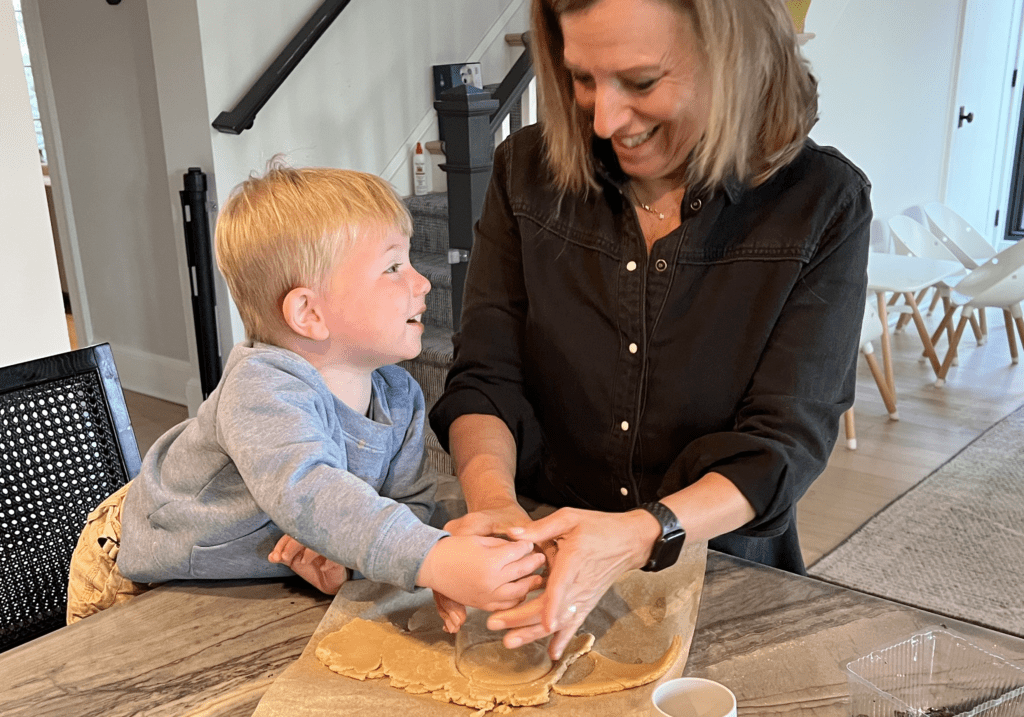
  • Bake a favorite recipe together

  • Wear a familiar perfume

  • Sing a beloved song or Shabbat melody

  • Walk the same path in nature

Years later, a scent or song will bring you instantly into the room again. This is how love becomes embodied memory.

5. Tell them their family story

Grandparents are the living bridge to family history. You carry stories about who their parents were as children, how your family came to be, what traditions mattered, what challenges were overcome.

Share: 

  • Stories of their parents growing up

  • Family humor and mishaps

  • Where ancestors came from

  • What values guided your life

  • Continue (or create) rituals and traditions around Jewish holidays and themes.

These stories and practices give children roots — a sense that they belong to something larger than themselves.

6. Notice and name their uniqueness

Children blossom when they feel truly seen.

Tell them:

  • “You are so thoughtful.”

  • “I love how curious your mind is.”

  • “You have such a kind heart.”

When a grandparent names a child’s special qualities, it becomes part of their inner identity. Long after you are gone, your voice will still remind them who they are. 

7. Listen to them — and learn from them

Connection flows both ways. When you listen deeply to your grandchildren — their ideas, their worries, their imaginative worlds — you send a powerful message: You matter. I learn from you.

Ask:

  • “What do you think about that?”

  • “How do you handle something like that?”

  • “Tell me more.”

Children who feel heard grow into adults who trust relationships. 

8. Create “just ours” activities

Shared rituals become lifelong touchstones.

  • Challah French Toast on weekend mornings

  • A cozy bedtime story

  • Gardening together

  • Visiting a familiar park; sitting on the same bench

  • Building or creating something side by side

These become “our things” — portable memories children carry forward long after childhood ends.

9. Model kindness and repairing the world

Jewish tradition teaches tikkun olam — helping to repair the world through acts of kindness and justice. Grandchildren learn values by watching how you live.

Let them see you:

  • Help neighbors

  • Volunteer in the community

  • Give tzedakah

  • Treat others with dignity

Your actions teach them: This is how we care for the world. That value will outlive any object you leave behind.

10. Speak openly about love continuing

Children need gentle honesty. You might say:

  • “One day I won’t be here in the same way, but our love will always stay with you.”

  • “When you feel brave or kind, feel that we are together.”

These words prepare for continuity, not fear.

Afterthought

The greatest gift you give your grandchildren is not something they can hold. It is the experience of being deeply loved, deeply seen, and deeply safe in your presence. That experience becomes their foundation.

One day, when they face a hard moment, smell cinnamon, hear a familiar song, see a butterfly pass by — they will feel you nearby.

And in that moment, love will have done what it has always done in Jewish life: passed faithfully from generation to generation.

May your love be their lifelong blessing.

A Personal Note from the Author

One of the most precious human experiences is staying connected with someone we love deeply, even after they have died. A familiar scent, a song, a place, or an experience can instantly transport us to a time when we felt comfort and peace. In those moments, we realize that love does not end with physical presence; it becomes part of who we are.

I learned this early in life. My maternal grandparents died when I was a toddler, so I have no first-person memories of them. And yet, I grew up feeling that I knew them. My mother kept their memories alive lovingly recalling incidents, interests, and unique personalities. As she shared stories, she shared their values and by doing so, I realize how their “presence” shaped my life.

The bond you build now with your grandchild can endure long beyond your physical presence — becoming a source of comfort, identity, and strength throughout their life.

I often find myself articulating specific descriptors of my experience: “I love our time together — having our adventures; creating art together, listening to our favorite music, teaching you the family recipes, going through photo albums, exploring in the woods, making up silly songs, having you teach me what you know.”  I sometimes add: “I hope you remember these fun times after I am gone.  Trust that I will always be with you — just in a different form. Quiet yourself and listen deep within.  Or just remember that you are part of a long line of people who loved art, explored nature [fill in what suits you]. Think of me when you see a robin or a butterfly.”

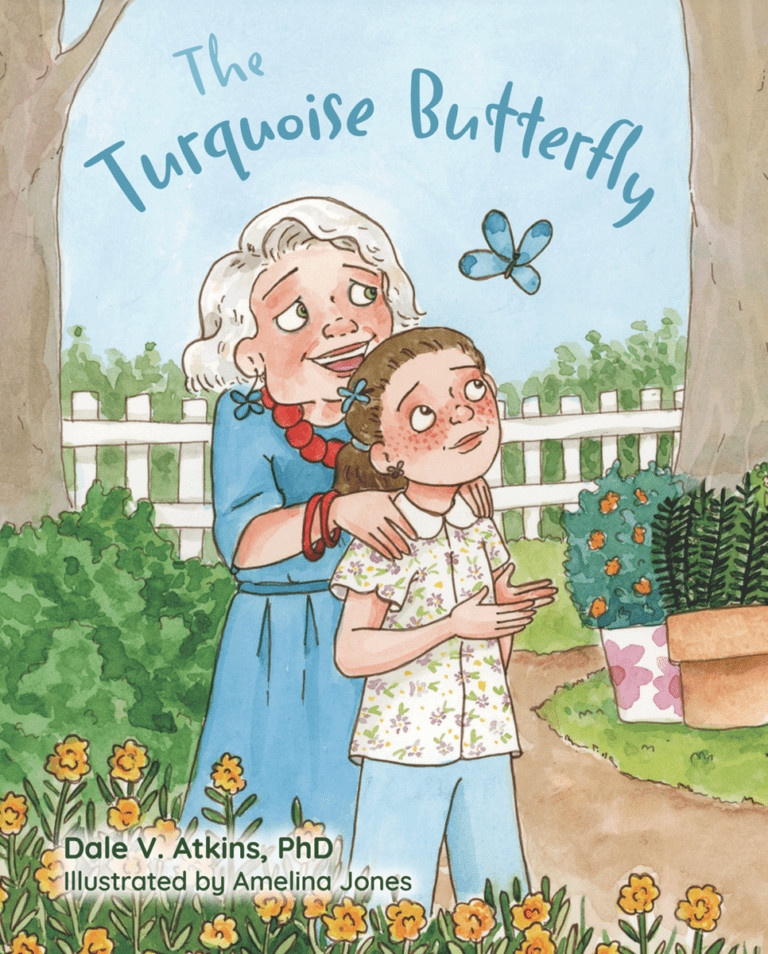
Dale Atkins, PhD, is a licensed psychologist, author, and public speaker with special interests in healthfully managing life’s challenges, intergenerational relationships, and caregiving. She is the author of the recently published The Turquoise Butterfly, a celebration of eternal love and transformation, beautifully illustrating the deep bond between a grandmother and her granddaughter. 

Photographic Credits
Banner courtesy of Margie Bogdanow
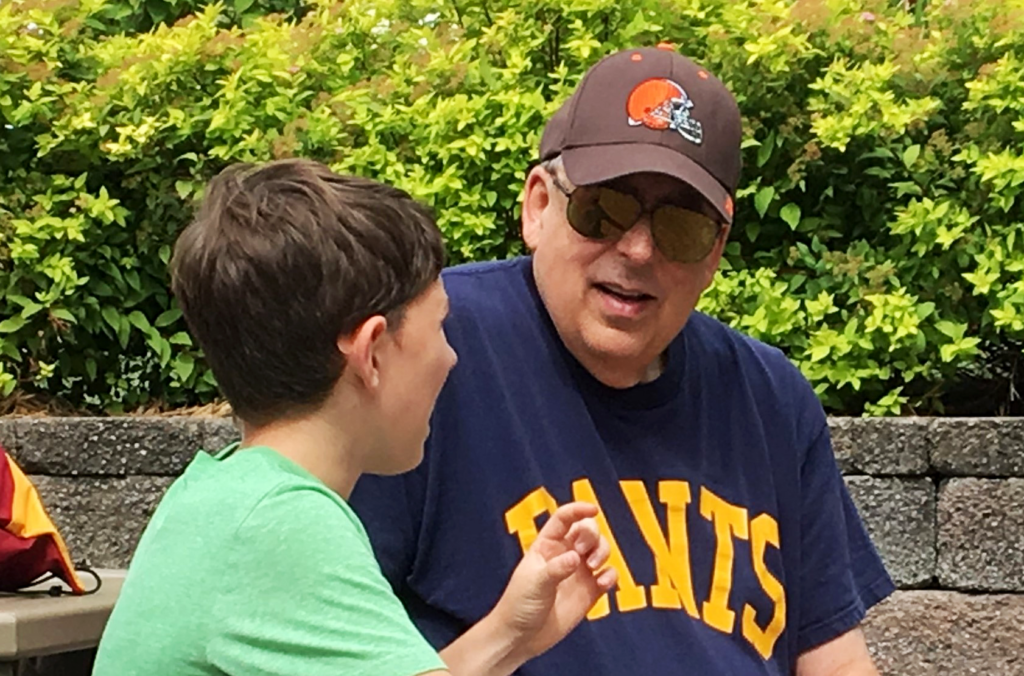
Grandparent-grandchild talking by Stephanie Fink
Baking courtesy of Debra Weinberg
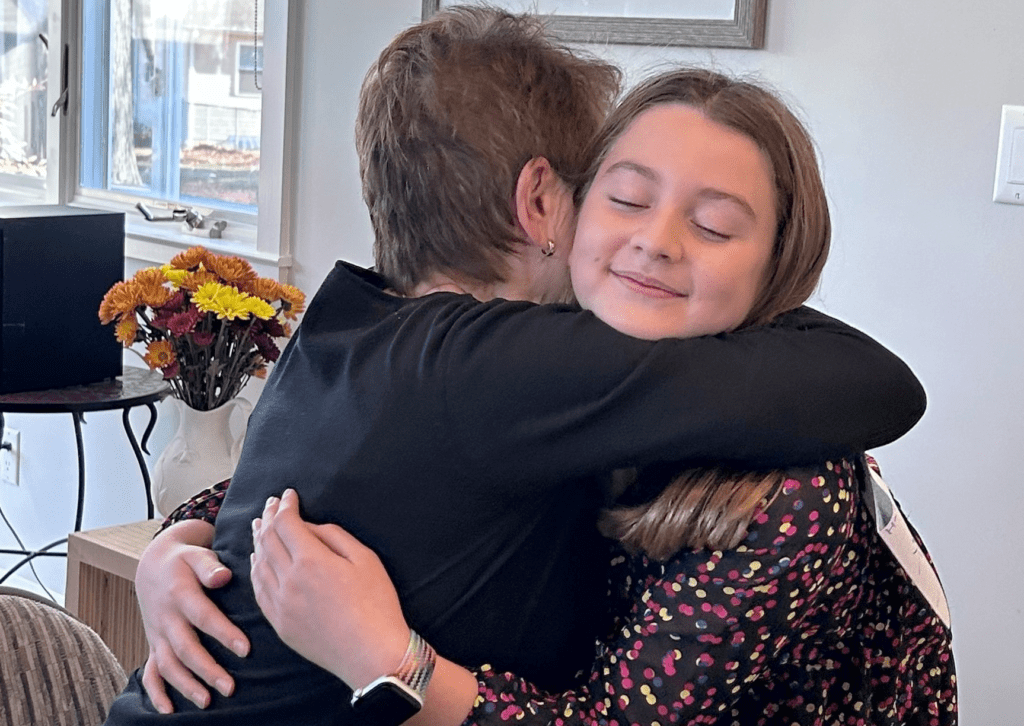
Hug by Steven Berger
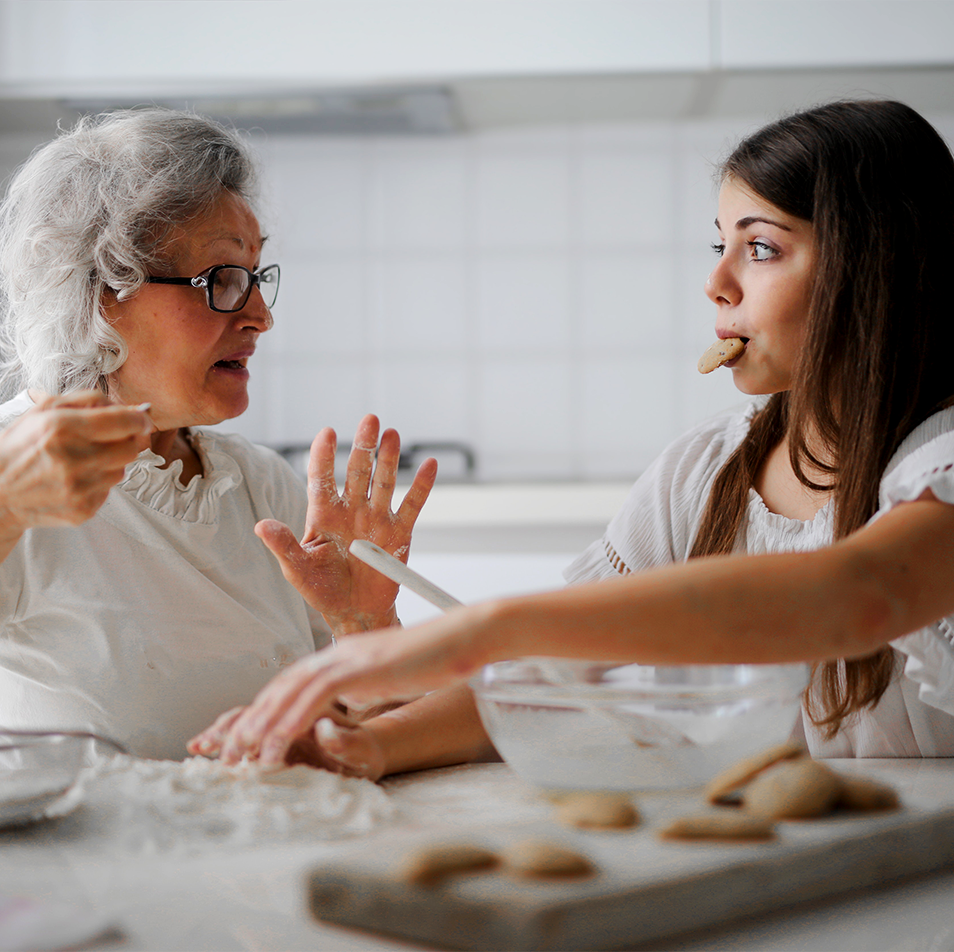
Eating cookies courtesy of Pexels
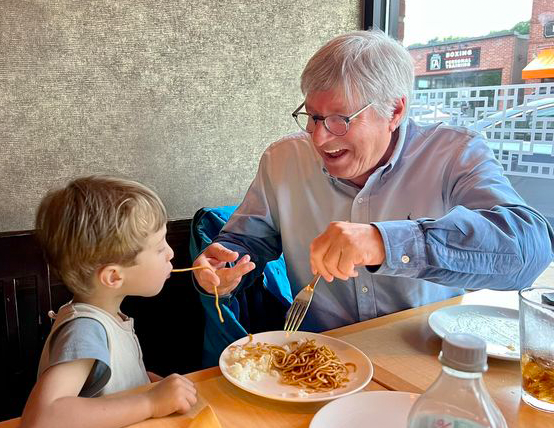
Spaghetti by Abbie Celniker
Volunteering courtesy of Pexels